
Browsing Articles Written by

Zachary Jensen

Zachary Jensen is a writer, journalist, sometimes translator and educator from Los Angeles, CA. He currently teaches English at various colleges across LA. His work has recently appeared in LA Record, Cultural Weekly, Entropy, Pank, Art Memo, Dispatches From The Poetry Wars, Alligator Zine and other places. He is the Managing Editor of Angel City Review and the editor for the Animals Chapbook Series at Business Bear Press.

Book Review

The Hermit

by on August 2, 2016

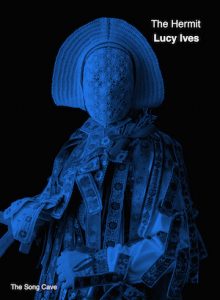
lucy-ivesThe Hermit by Lucy Ives


Solitude. The first thought that this concept strikes within me is one of solemn and despondent feelings. Of hopelessness, the sheer and unbearable weight of being alone in the world, existing in a place, real or metaphorical, where you are left to your own devices. However, within this place that real introspection can occur. Where one can begin to process life’s eventualities, the brief moments that make up the whole, and the successes and failures that makes life worthwhile. It is exactly these things that Lucy Ives is exploring in her recent poetry book “The Hermit”.

At first glance this book is quite sparse. Blank space is at a premium in this text with many sections encompassing only a paragraph, sentence, phrase or other musing. This is not to the books detriment though. The emptiness of it all forces one to be more tuned in to the feeling of isolation, but more so to the language that is being used here. Language that captures quite powerfully the feelings or ideas Ives had set out to explore. Words are examined with precision, ideas are tackled with ease, and the reader is forced to examine language in modes that may twist your mind theoretically. Ives use of language is at times quite lyrical, thoughtful, poetic, introspective, philosophical or all of these at once. Small moments in life, moments that may otherwise go unnoticed are given the chance to shine in the limelight of existence.

The book is hard to pin down because it is ultimately so many things at once. It is a book about process: the process of writing, writing poetry and prose, how art comes into that process, and all the things it can encompasses. But it is also a book about emotions, either miniscule in their initial impact or devastating in those moments of inception, that dig into you so deeply that they become a part of who you are. The idea of these moments and emotions cycle back and we are presented with how Ives takes these emotions and turns them into something beautiful. So we now cycle back to the idea of process, but not as course one takes in order to create, but as a means to make sense of the world, to heal, to cope with the weight of it all.

It is within this realm of process, that the book that Lucy Ives has written becomes something remarkable, personal, and quite human. Ives breaks down fragments of her existence into the pages of this book and lays them out bare. The reader is given a glimpse into a world that otherwise is sealed; and by the end of the book you may not understand a single thing, or you may now be privy to many things, however this exploration will no doubt open doors inside your own soul to allow the band of thoughts and memories, and emotions to play their song and hopefully make you dance, at least a little.

“What if a person will always be a few steps from life, whetever that is, and what if this person will feel dissatisfied, imperfect on account of this distance? What will we say to them? Do they become a character typical of their time? And, if such a person cannot become such a character, what is the use of them?”

The Hermit is available now through The Song Cave

News

Ghost Makers

by on February 11, 2015

On Saturday January 31st, an intimate and attentive audience had the opportunity to witness a public reading of the first of six installments of Chiwan Choi’s new novel Ghost Makers. The reading, which can also be construed as more of a performance, was captivating. What Choi, a prolific poet and storyteller, has presented thus far proves to be just as powerful as anything we’ve come to expect of him in the past. For those who missed it, the story follows a narrator who is flawed yet good-hearted, trying to make his way in the world. There were some flashbacks to a few key moments in the narrator’s childhood, such as a night in the snow where the child discovers his dog laying dead, only to lay with his friend for the rest of the wintery night.

The initial offering spans three different countries and a number of years. The story, which is filled with beautifully poetic language, has an autobiographical air to it, giving the audience the feeling of peering into Choi’s soul – but who’s to say which moments are fact, and which are fiction? A scene between the narrator and his lover was especially poignant with its analysis of the troubles we often find ourselves in relationships and the beauty of the moments that just seem to work. The narrator is knocking on the door to his lover’s place. He gets no response and heads over to her bedroom window only to find her sound asleep. Slipping through the window he sets down two subway meal deals he had just purchased for the pair. Rather than wait for her to wake up, he goes back out the window and heads over to a bar. After about five drinks she calls him asking where he had been. The discussion leads him back to her place where he discovered she ate his sandwich. The conversation quickly evolves into talks of a wind-up elephant he once bought her. Even though he was drunk and she ate his prized sandwich, the level of care and intimacy the two shared made the situation feel comforting and right, like one of those few moments in life where you know that you are with someone who understands you, even if the rest of the time is a complete mess.

This project, which is in collaborative with Katz’s Deli, will continue through the entirety of 2015. Throughout the year Choi will spend one month working on the novel, and then presenting his progress by giving a reading at a different publicly accessible location until its completion. In addition to the performance aspect of reading a novel in progress, there is also the Buddhist-like quality of the “performance” as well. After every reading, Choi will destroy the chapter he had labored over tirelessly once he has finished sharing it. Per his contract with Katz’s Deli (which was also read prior to the start of the event), he must destroy the work in a different way each time. The inaugural chapter was destroyed via burning the typed pages in a barbeque. After the reading, audience members are asked to respond to the prompt “what do you remember” at a video, audio, or typewriter station. It is these anonymous documentations that will ultimately be published at the conclusion of the year. The next reading will occur at yet to be announced time and place sometime in the month of March. While every section makes for a larger part of a whole, the sheer nature of its inception will surely allow for each piece to work as a vignette as well.

1 2